
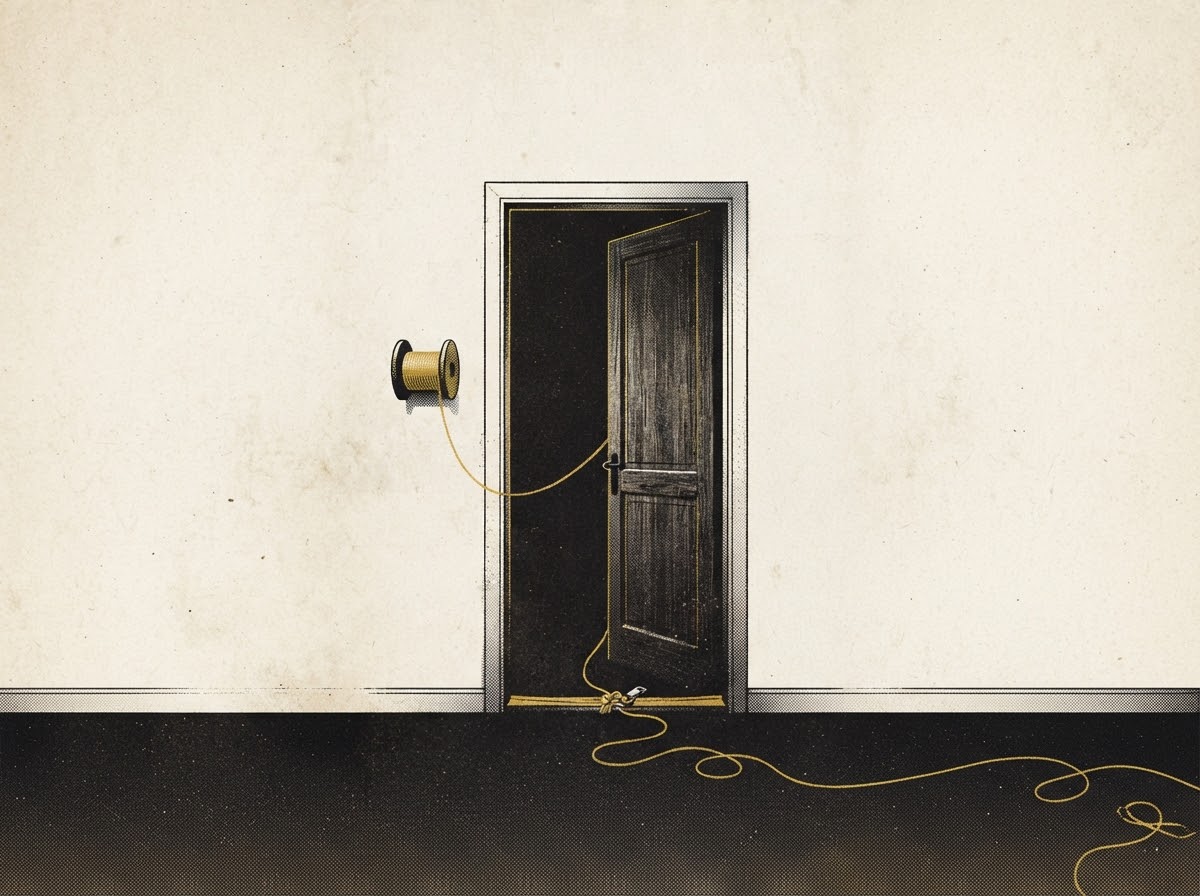
The knowledge that walks out the door
Seven years ago I wrote about what happens to a business when people leave — the systems, the guidelines, the conversations that walk out the door with them. Turns out the fix I was reaching for back then is finally within reach.
Back in 2019 I wrote about team continuity — how the only constant in any team is that it changes, and how the businesses that hold up aren't the ones with the most talented people, but the ones whose know-how doesn't leave when someone does.
Solo owners and small teams don't need a corporate "operations manual" — they need their everyday know-how (how you handle a late payment, how you quote a job, how you train someone new) turned into something clear enough that a person, or now an AI assistant, can just follow it. No hoops, no guessing.
Where a rigid SOP still breaks
The catch is the same one I flagged back then, just sharper now: a rigid Standard Operating Procedure (SOP) handed to an AI agent can do the wrong thing confidently, the same way a rigid guideline handed to a new hire used to. Four ways to keep it flexible — an update to my original four:
- Write the why, not just the what. A reason gives whoever follows it room to adapt.
- Flag the judgment calls explicitly. Mark the 1-2 steps where a human should decide, not follow blindly.
- Make updating as easy as writing. Use AI in reverse: dictate the change, ask Claude to update the doc, instead of letting it drift out of date the way guidelines quietly do.
- Review on a trigger, not a calendar. Update it when someone new joins or a process breaks, not on a schedule nobody keeps.
The tool
Claude, for this specific job. It's genuinely good at turning a rambling explanation into clean, numbered steps — feed it a voice memo transcript or a messy note and it'll structure it without much back-and-forth.
Where it needs a push: left alone, it tends to write instructions that sound complete but quietly assume knowledge only you have. It won't flag its own blind spots unless you ask it to — which is why the prompt below explicitly tells it to call out vague steps and judgment calls, not just format them. Ask for that, and the output holds up. Skip that instruction, and you'll get a tidy-looking SOP with the same gaps your old one had — just better formatted.
Worth noting: this isn't just a Claude thing. Once you've written the SOP, every major assistant has somewhere to park it so you stop re-explaining yourself — Claude Skills, ChatGPT Custom GPTs, Gemini Gems. Claude Skills and the underlying SKILL.md format have become something close to an open standard for cross-platform AI tasks, portable across 30+ developer tools rather than locked into one app. But Custom GPTs and Gems remain highly relevant too, especially outside a developer-heavy team — here's roughly how the three stack up:
| Feature | Claude Skills (SKILL.md) | ChatGPT Custom GPTs | Gemini Gems |
|---|---|---|---|
| Primary advantage | Portability across 30+ developer tools (Cursor, Code, etc.) | Unrivaled consumer distribution via the GPT Store | Native integration with Google Workspace (Drive, Docs) |
| Target audience | Developers, engineers, power users | General consumers, non-technical teams | Enterprise workers using the Google Cloud ecosystem |
| How it runs | Progressive disclosure — dynamically loaded only when a query triggers it | Dedicated chatbot — separate, manual interface persona | Workspace assistant — contextualized panel alongside your work |
| Data memory | None built-in — relies on your files/Git history | Strong, persistent personal user memory system | Deep real-time lookup across live Google account data |
Claude's what we use day to day — but the format matters less than actually writing the thing down somewhere your AI can find it.
The move
Pick one task you keep re-explaining to people (or redoing yourself the same annoying way). Talk it into your phone or jot rough notes, then drop this prompt into Claude:
"Turn this into step-by-step instructions I can hand off to an AI agent or a colleague — also called an SOP, or Standard Operating Procedure. Keep it in plain language, number each step, flag anywhere the instructions are still vague or assume knowledge only I have, and call out which steps need human judgment rather than strict following."
Once a process is written this way, you can save it so your AI remembers it without you re-explaining it every time — write it once, stop repeating yourself. Worth its own deep dive down the line.
From the Field
I wrote about this exact problem back in 2019, before any of us had a tool like this. The four tips still stand, but actually living up to them has gotten a lot easier.
These days we do it with Skills, and we're investing in a shared AI memory system so the "why" behind a decision doesn't just live in one person's head. We've open-sourced some of what we've built — you can find it at andrs.nu/foundry.
What's still only in your head?
Frequently asked questions
What's wrong with handing an AI agent a rigid SOP? It can do the wrong thing confidently, the same way a rigid guideline handed to a new hire used to. A good SOP needs the why behind each step, not just the what, so whoever follows it — human or AI — has room to adapt.
How do I turn what's only in my head into something an AI agent can use? Talk or write out the process roughly, then ask an AI tool like Claude to turn it into numbered steps — and explicitly instruct it to flag vague steps and call out where human judgment is needed. Left alone, AI won't flag its own blind spots; you have to ask for that.
How often should an SOP be updated? On a trigger, not a calendar — update it when someone new joins or a process breaks, not on a schedule nobody actually keeps.
What's the four-part checklist for a flexible SOP? Write the why, not just the what. Flag the judgment calls explicitly. Make updating as easy as writing. Review on a trigger, not a calendar.