Every company has someone who has quietly become the AI person. They found the tools, they answer the questions, and they're the one colleagues message when a prompt goes sideways. Nobody asked them to, and nobody is protecting their time. When you finally make it official, most companies make the same mistake: they hand the whole thing to the one person who was already carrying it.
Shared ownership beats a single champion
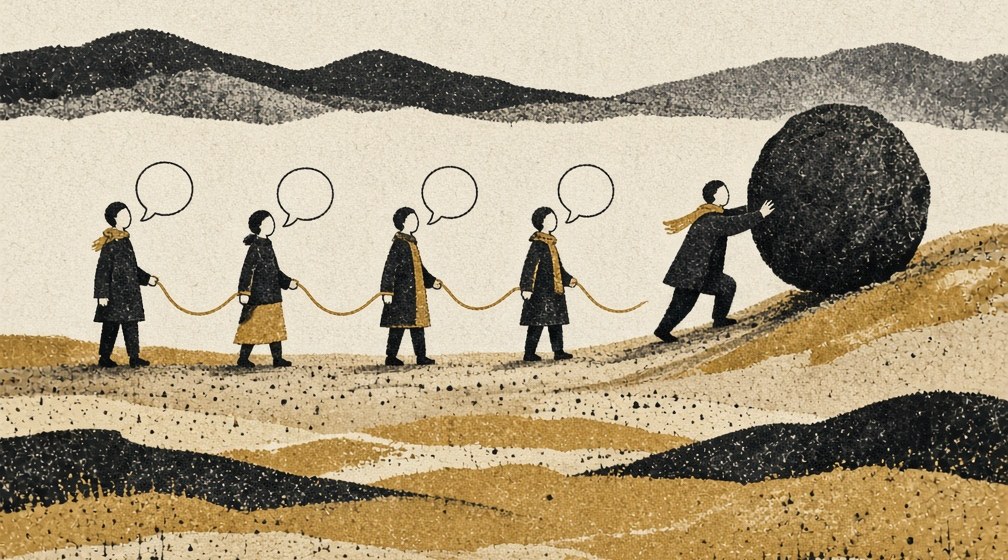
If AI is "everyone's job," it is no one's job. The work lands on whoever cares most, which is usually the person who is already doing too much. The standard fix is to appoint an AI champion. I think that's only half right: a champion works when they aren't alone.
Give one person the whole job and you get the same few problems. They become the helpdesk for every AI question. They have the enthusiasm but not the authority to change how a team works. They can't see into every function. And if they burn out or leave, everything they learned leaves with them. The most energetic person in your company gets a second, unpaid job.
What works better is a small network. One advocate sits inside each team: someone colleagues already trust, who volunteers, and who helps their own team in the context of their own work. The advocates then talk to each other, so ideas move across functions instead of staying in one corner.
Both GitHub and OpenAI Academy describe this pattern. GitHub recommends volunteers connected through a shared channel, spending 30 to 60 minutes a week so the role doesn't become "a second job." OpenAI's "Local Activators" sit inside their teams, start with three to five people, and are explicitly not meant to own workspace administration, governance or process redesign. It lists "depending on one central person" as a pitfall.
My take for a small company: pair one advocate with your COO. The advocate brings what they see on the ground. The COO decides, sets priorities and clears blockers. That pairing is my own view; neither source prescribes it. It does match what OpenAI says about leadership: set direction and remove blockers.
A quick test: can your AI advocate say no to a request, and is there someone who can make a decision when they raise a problem? If not, you haven't made them a champion. You've made them a helpdesk.
The tool: a light champion operating model
This one isn't software. It's a simple structure you can set up in an afternoon, using tools you already have:
- Advocates: start with three to five volunteers, ideally one per team.
- One channel: a single Slack or Teams channel, not several.
- A monthly 30-minute session: advocates share one workflow, lesson or blocker, and the facilitator rotates.
- A quarterly review: what was tried, what got reused, what is stuck.
- A sponsor: the COO or another leader who decides and clears blockers.
- A shared log: a Notion page (or any shared doc) with what has been tried, including what failed.
The structure matters more than the tool. Notion is a fine home for the log, but a shared doc does the same job. The risk is that it turns into a meeting burden, or that you count attendance instead of whether workflows get reused. Neither source offers adoption figures, so treat this as sound practice rather than a proven formula.
The move
This week, set up the minimum version:
- Ask for volunteers. Post a short call with a deadline instead of appointing someone.
- Protect the time. Agree on 30 to 60 minutes a week and write it down, so it replaces other work instead of adding to it.
- Name a sponsor. In a small company, that's your COO. They own decisions and blockers.
- Book the first session. A 30-minute slot within the next 30 days, with three to five people.
If you already have an unofficial AI person, start by asking what you can take off their plate.
From the Field
In government I was part of the legal team, yet I was the person colleagues came to for anything tech. I helped with setups and software applications, and I was also the one asking management for new software or improvements when I saw how they could benefit our work. It came naturally, but it was all outside my regular work. What made it possible was that management supported it.
Later, leading teams, I saw the other side. We constantly needed innovative solutions, and leaving decisions to the people on the ground was usually the quickest route to something that worked. They needed our support and a framework: what they could decide themselves, and what had to go up to management. That kept us flexible, because not every issue needed higher management. It only worked with clear rules for escalating, and a goal everyone understood, so decisions on the work floor stayed in line with it.
AI advocates need exactly that.
Frequently asked questions
What goes wrong when one person becomes the company's AI champion? They become the helpdesk for every AI question. They have the enthusiasm but not the authority to change how a team works, they can't see into every function, and if they burn out or leave, everything they learned leaves with them.
What works better than a single AI champion? A small network: one volunteer advocate inside each team, who helps colleagues in the context of their own work, with the advocates talking to each other so ideas move across functions. In a small company, pair them with a sponsor such as the COO, who decides, sets priorities and clears blockers.
How much time should an AI advocate spend on the role? GitHub recommends 30 to 60 minutes a week. Agree on it and write it down, so it replaces other work instead of adding to it.
How do I set up an AI champion network this week? Ask for volunteers with a deadline instead of appointing someone, protect 30 to 60 minutes a week, name a sponsor who owns decisions and blockers, and book a first 30-minute session within 30 days with three to five people.
Sources
- Activating internal AI champions, GitHub
- Grow a network of internal champions, OpenAI Academy