
FIELD BRIEF
Your AI champion is about to become a helpdesk.
Every company already has an AI person: the one who found the tools and answers the questions. Making it official usually means handing them the whole job. The fix isn't a better champion. It's a small network of advocates, protected time, and a sponsor who can actually decide.
A Field Brief is a structured, one-page distillation of a key strategic question. Each brief diagnoses the root cause, maps where the gap shows up, and closes with a concrete next step — designed to be read in under 5 minutes and acted on immediately.
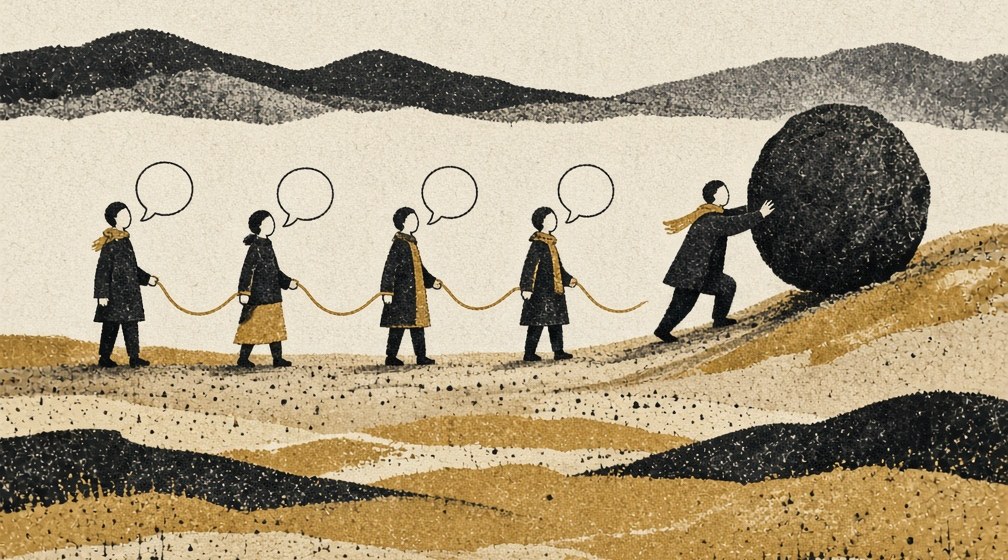
Give one person the whole job and they become the helpdesk for every AI question. They have the enthusiasm, but not the authority to change how a team works.
"If AI is everyone's job, it is no one's job. A champion only works when they aren't alone."
Why a single champion breaks, and the four pieces that turn it into a network.
One volunteer per team, not one for everyone.
Start with three to five volunteers colleagues already trust, each helping their own team in the context of their own work. Ideas move across functions instead of staying in one corner.
Protect 30 to 60 minutes a week.
Agree on the time and write it down, so it replaces other work instead of adding to it. Otherwise your most energetic person gets a second, unpaid job.
Pair the advocate with someone who decides.
In a small company, that's your COO. The advocate brings what they see on the ground; the sponsor sets priorities and clears blockers.
Log what was tried, including what failed.
One channel, one shared page, a monthly 30-minute session. If an advocate leaves, what they learned stays.
The Move, set up the minimum version.
Ask for volunteers with a deadline, name a sponsor, and book the first 30-minute session within 30 days.
From the field.
I was the unofficial tech person, then I led teams that needed one.
In government I was on the legal team, yet colleagues came to me for anything tech. It was all outside my regular work, and it only worked because management supported it.
Management backed the extra role, so asking for new software or improvements actually led somewhere.
Leading teams, we gave people clear rules on what they could decide themselves and what had to go up, plus a goal everyone understood.
An AI champion isn't a role you hand out. It's a structure you support.